How do you borrow against stored crops in Tanzania? Deposit graded crops in a warehouse licensed by the Warehouse Receipts Regulatory Board. The operator issues a receipt in triplicate, including a certificate of pledge. A bank holds that certificate, advances a share of the stock value and is repaid from sale proceeds. Illustrative advances run from about 50% to 75% of value, set by each bank.
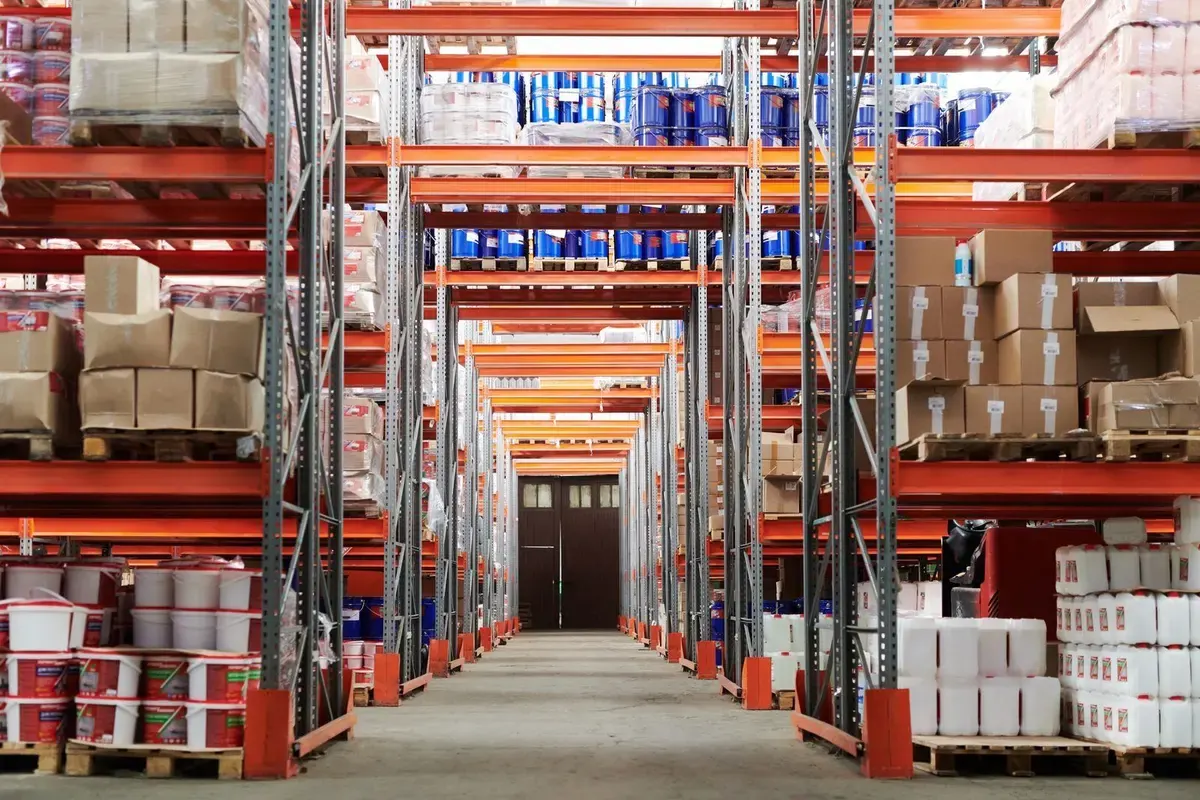
What the law says: the Act, the Regulations and the Board
The warehouse receipt system Tanzania uses rests on the Warehouse Receipts Act, 2005 (Act No. 10 of 2005), now Cap. 339 in the Revised Edition 2023, and the Warehouse Receipts Regulations, 2016 (GN 109 of 2016). The Act covers Mainland Tanzania only and applies to agricultural commodities that the Minister declares by Gazette order (Cap. 339 R.E. 2023, ss.2 and 3). A warehouse receipt is a receipt, in writing or electronic form, issued by a licensed warehouse operator for goods it holds.
Section 4 of the Act establishes the Warehouse Receipts Regulatory Board (WRRB) as a body corporate. Section 5 gives it the licensing function, and section 6 gives it powers of inspection, suspension and revocation. Licensing conditions sit in ss.16 to 25: an application, a bond, casualty insurance and proof that the premises and the applicant are fit. Receipts are dealt with in Part V (ss.32 to 41), the operator's duties and lien in Part VI, negotiation in Part VII and offences in Part VIII (ss.74 to 82). The Regulations add the detail: licence types, warehouse grading, bonds, receipt contents and the fee schedule (GN 109 of 2016).
The regime is live and active. The WRRB marked 20 years of the system in March 2026. Its executive director reported that farmers received TZS 2.298 trillion in 2025/26, within trade of TZS 2.679 trillion (The Respondent, 31 July 2026).
Who should read this
Farmers' groups and primary cooperative societies (AMCOS) that store crops before sale. Traders and processors who buy, store and finance stock. Owners of idle stores and warehouses who want to know whether a licence can turn an empty building into income. Credit officers and advisers. For leasing a warehouse to an exporter rather than a crop depositor, read the warehouse leasing checklist.
Which board licenses warehouses, and is the old name still in use?
The licensing body today is the Warehouse Receipts Regulatory Board, and Cap. 339 R.E. 2023 names it in s.4. The older name was the Tanzania Warehouse Licensing Board (TWLB), which appears on the 2013 operational manual issued under the Act (Ministry of Industry and Trade, Operational Manual, Version Two, 2013). A programme leaflet states that the board was renamed after 2015 amendments (WRRB leaflet hosted by ASPIRES, 2025). We could not read the amending instrument, so treat the exact date and instrument of the rename as unverified. The practical point is settled: a 2026 file should name the WRRB, and any document that still says TWLB is old.
The Board keeps registers of licensed operators, collateral managers and inspectors. A shed is not a licensed warehouse because it holds a business licence or a standards certificate. It is licensed only when the WRRB has licensed and designated it. A published legal note explains the same point: a warehouse under the Act is a store registered or licensed by the Board, and its stored goods can serve as collateral (KG&P, undated). The earlier Zatra note on what a buyer holds covers the receipt from the buyer's side.
Which crops and which warehouses does the system cover?
The WRRB director reported in March 2026 that the system operates in 23 of the 26 Mainland regions and covers 18 crops and commodities. Named crops include cowpeas, cashew nuts, pigeon peas, sesame, mung beans, coffee and tea (The Respondent, 26 March 2026). The July 2026 report adds cocoa, lentils, green grams and soybeans, and says livestock is planned for 2026/27, with the first auction expected in Mvomero District (The Respondent, 31 July 2026).
The weight of the system sits in a few crops. For 2021/22 to 2023/24, cashew nuts were 56% of warehouse sales, sesame 25%, coffee 8% and pigeon peas 5%, and five regions (Mtwara, Lindi, Ruvuma, Mbeya and Coastal) held 79% of stored value in 2023/24 (Daily News, 5 November 2024). Maize and paddy were on the 2022 crop list in the WRRB leaflet, but a December 2024 reform forum still listed integrating staples such as maize and rice as a goal (Kilimo Kwanza, 12 December 2024). If your crop is maize, ask the WRRB whether a receipt is issued for it in your region before you plan around it.
Published warehouse counts do not agree. The leaflet reports 110 licensed warehouses, down from 185, with 56 operators including six collateral managers. The 2024 forum material says registered warehouses rose from 83 in 2021 to 246 in 2023. The definitions differ, and neither is a current count. Ask the WRRB for the register on the day you rely on it.
How does a farmer, cooperative or trader finance against a receipt?
The sequence follows the 2013 manual and the Regulations. Each step is a point at which a bank can stop the loan.
- Deposit and grade: the depositor brings dried, cleaned produce with a delivery note. The operator or collateral manager weighs, tallies and grades it.
- Receipt issue: the operator issues the receipt only after the goods are received and stored. Regulation 52 requires triplicate printing: a certificate of title, a certificate of pledge and the book copy.
- Loan contract: the depositor signs a loan contract with the financial institution, and the institution signs an undertaking with the operator (manual, s.4.4).
- Pledge: the depositor hands the certificate of pledge to the bank. Regulation 36 gives the bank the right to hold it before disbursement.
- Disbursement: payment runs through a registered financial institution. Regulation 32 makes the financial institution the payment point for all transactions in the system, and the manual bans cash payments.
- Sale and release: the buyer pays through the bank, the loan is repaid first and the operator releases goods against the certificate of title and the pledge, with the financier's release order for partial deliveries (regs 55 and 56).
Banks run their own versions. NMB lists farmer groups, AMCOS, large farmers and companies as eligible and sets a minimum of 50 tonnes of crop. It asks for a procurement plan, a cash flow projection and a crop business licence. Cooperatives add a certificate of maximum liability from the Registrar and AGM minutes (NMB Bank Plc, product page, undated). CRDB describes a commodity financing product under collateral management with advances of up to 50% of stock value without a confirmed sales contract and up to 65% with one (CRDB Bank Plc, product page, undated). The Cooperative Bank announced a planned product, Ghala Pesa, in August 2025 to let farmers borrow against stored crops, with no terms published (Daily News, 4 August 2025). See also the Fursa365 guide to how a bank reads receivables, which uses the same credit logic.
What collateral rules apply to a warehouse receipt?
Four rules matter most.
First, negotiability. A negotiable receipt promises delivery to a named person or to his order and passes by endorsement and delivery (ss.35, 64 and 65). A non-negotiable receipt does not carry the same transfer rights. A bank will want the negotiable form, or the certificate of pledge, in its hands.
Second, proprietary rights. Section 33(2) recognises rights in stored goods arising through a mortgage or other security for credit. The Act has no separate section on pledging a receipt, so the loan documents carry the detail. Section 79 makes it an offence to negotiate a receipt for goods that are mortgaged. That is why a depositor should never sell or move goods that a bank holds a certificate for.
Third, the operator's lien. The operator may claim lawful storage charges and related costs, and may enforce the lien by lawful sale (ss.56 to 63). A lender should therefore ask what the lien stands at on the day of release. Charges must be reasonable, approved by the Board and displayed on site (reg 66).
Fourth, the advance cap. The 2013 manual says financing is generally limited to 75% of the commodity's value and suggests a minimum weighted average of historical prices over at least five years, with a tripartite agreement among lender, operator and borrower (s.2.6). That figure is guidance, not a statutory cap, and it dates from 2013. Each bank sets its own advance rate. If the borrower is a company and the bank takes a registrable charge, the BRELA filing fee depends on the sum secured (register ID F0011).
The new movable property security law adds a second layer in time. Act No. 5 of 2026 was enacted, but our guide to movable assets collateral found no commencement notice by 11 November 2026. Until a notice appears, banks rely on their own security documents, the receipt rules above and existing registers.
How can an idle warehouse owner qualify for a licence?
A warehouse must be licensed by the Board before it operates in the system (s.16, Cap. 339). The licence types in reg 15 are warehouse operator, collateral manager and inspector. The Board grades the building, and an owner who is not the operator needs to agree who will hold the licence. The Ministry of Agriculture's December 2024 guideline for public warehouses names three agreements between owner and operator: service, property management and lease (Ministry of Agriculture, Public Warehouses Utilization Guideline, December 2024).
| Condition | What the sources say |
|---|---|
| Premises | Calibrated weighing equipment, sound floor, roof and walls, fire-proof safe and fire-fighting equipment, night security and lighting, secure doors and windows (regs 15 and 28 and the First Schedule). Grading scores out of 100: Grade A 75 or more, B 60 to 74, C 40 to 59 |
| Applicant file | Form A, sketch map, attested CVs and photographs of directors, employment contracts of at least one year for key staff, academic certificates (reg 15(2) to (4)). The 2013 manual adds incorporation papers, a title deed or lease, bank confirmation and fire and burglary cover |
| Bond | Filed before the licence issues. Set by the Board, and at least 10% of the assessed business value (regs 44 and 46(3)). Minimum amounts by grade appear in the Fourth Schedule |
| Insurance | Casualty insurance from an insurer authorised in Tanzania (s.23). Cancelled cover can lead to suspension (s.25) |
| Procedure | Board publishes the application within 7 days; objections are filed within 14 days; objections are considered, the decision given and the licence granted within 7 days each (regs 16 to 20) |
| Validity | Up to twelve months. Renewal is filed within 45 days before expiry (regs 20 and 21) |
The statutory steps take about a month on paper. Practice is slower: the December 2024 forum reported that licensing averages 2.65 months and is a bottleneck (Kilimo Kwanza, 12 December 2024). An owner should plan on a quarter, and the WRRB, not Zatra, decides each application. Foreign-owned applicants should also confirm with an advocate whether the reserved-activities notice, GN 487A of 2025, or land-holding limits touch their structure. We did not verify whether warehousing is among the 15 reserved activities.
What does it cost? The fees that are in the register
Government fees are paid at the official rate and sit apart from any Zatra professional fee. The WRRB schedule is in the Fourth Schedule to the Regulations and is carried in the Zatra fee register as ID NEW-07-15. The table lists only lines that the register confirms.
| Item | Amount | Register ID |
|---|---|---|
| Application form for a warehouse operation, collateral manager or inspector licence | TZS 20,000 | NEW-07-15 |
| Warehouse operation licence | TZS 200 per tonne of capacity (confirm the unit and period with the WRRB) | NEW-07-15 |
| Inspector licence | TZS 200,000 a year | NEW-07-15 |
| Receipt administration fee | Operator TZS 1.00 per kg; depositor TZS 0.50 per kg; buyer TZS 0.50 per kg | NEW-07-15 |
| Financial institutions | 0.25% interest rate, as the register prints it (confirm how the WRRB applies it) | NEW-07-15 |
| COPRA warehouse owner registration; warehouse operating licence (food crops) | TZS 10,000 each (confirm whether it applies to your crop) | F0775 |
| NEMC annual fee, warehousing | TZS 300,000 a year | F0504 |
| BRELA registration of a company charge | TZS 22,000 up to 100m; 50,000 for 100m to 500m; 100,000 for 500m to 1bn; 150,000 above 1bn | F0011 |
| Stamp duty on a mortgage deed | 1% of the instrument, maximum TZS 10,000 | F0274 |
| Stamp duty on a lease (owner to operator) | 1% of the annual reserved rent | F0265 |
| Primary cooperative society registration | TZS 50,000 | F0152 |
Storage, lien and extra-storage charges are approved by the Board and are not fixed in the schedule, so they are not quoted here. Council produce cess is separate: a Daily News report of November 2024 said councils collect up to 3.0% on each kilogramme sold through the system, so confirm the rate in your district.
Where does TMX fit in?
The Tanzania Mercantile Exchange (TMX) is the trading venue, and the WRRB is the warehouse regulator. A law firm note of October 2026 states that the Capital Markets and Securities Authority licenses exchanges under the Commodity Exchanges Act, Cap. 445. It adds that TMX integrates the warehouse receipt system to support commodity-backed financing and price discovery (Clyde & Co, 6 October 2026). The firm notes it is a summary, not statute text.
The link is visible in cashew. TMX's 2025/26 raw cashew procedure builds sales catalogues from warehouse stock verified through the warehouse receipt system, and winning buyers receive the original warehouse receipt after payment (TMX, Raw Cashew Nuts Trading Procedure, 20 October 2025). Buyers must hold a Cashewnut Board buying licence. The 2026/27 season opened on 12 October 2026, and about 175,000 tonnes worth TZS 682 billion sold in the first three weeks through 20 auctions (The Respondent, 4 November 2026). The July 2026 report adds that 1.122 billion kg of nine crops sold through TMX auctions in 2025/26, against 781.6 million kg a year earlier.
TMX does not replace the bank. A depositor who wants cash before an auction still needs a lender and a pledge.
How do Mainland and Zanzibar differ?
The two jurisdictions are handled separately. The Act is limited to Mainland Tanzania, so a Zanzibar store does not hold a WRRB licence under it.
| Point | Mainland | Zanzibar |
|---|---|---|
| Statute | Warehouse Receipts Act, Cap. 339 R.E. 2023, and GN 109 of 2016 | The Mainland Act does not apply (s.2). We found no Zanzibar equivalent and could not verify one |
| Licensing body | WRRB | Unknown. Ask the Zanzibar authority for the crop and a Zanzibar advocate |
| Bank security | Receipt, certificate of pledge and bank documents | Zanzibar security law and the bank's own terms |
| Fees | Register ID NEW-07-15 and others above | Not in the Mainland register. Do not assume the same rates |
A Mainland depositor financing Zanzibar produce should have the bank confirm which law governs the security before money moves.
A worked example: 500 tonnes of cashew in a licensed warehouse
A primary cooperative society deposits 500 tonnes of raw cashew nuts in a licensed warehouse before an auction. Every price, rate and band below is illustrative, not a bank quotation. The price anchor is the reported average for the 2026/27 season: TZS 682 billion for about 175,000 tonnes is roughly TZS 3.9 million a tonne, our own division of the reported figures.
| Line | Illustrative figure | Note |
|---|---|---|
| Stock value | TZS 1,950,000,000 | 500 tonnes at TZS 3,900,000 a tonne |
| Advance band | 50% to 75%, so TZS 975,000,000 to 1,462,500,000 | CRDB publishes 50% and 65%; the 2013 manual says up to 75% |
| Loan used | TZS 1,170,000,000 (60%) | The bank decides after its own appraisal |
| Interest, 120 days at 18% a year | About TZS 69,200,000 | Rate is an assumption; confirm with the bank |
| WRRB receipt administration fees | TZS 1,000,000 | 500,000 kg at TZS 1.00 (operator) plus 0.50 (depositor) plus 0.50 (buyer); register ID NEW-07-15 |
| Council produce cess, upper bound | Up to TZS 58,500,000 | 3.0% of value as reported in 2024; district rate governs |
| Cleared from a sale at the assumed price | About TZS 651,000,000 | After loan, interest, cess and WRRB fees; before storage and lien charges, bank fees and tax |
The last line is 1,950,000,000 less 1,170,000,000, 69,200,000, 58,500,000 and 1,000,000, which is 651,300,000. Now test a price fall of 20%. The stock is then worth TZS 1,560,000,000, and the unchanged loan equals 75% of it. That is why banks discount stock and often want a confirmed sales contract before they go above the middle of the band.
If the borrower were a company and the bank took a registrable charge, the BRELA filing fee would be TZS 150,000 for a sum above TZS 1 billion (register ID F0011). Raw cashew export carries a levy of 15% of FOB value or USD 160 a tonne, whichever is greater (register ID F0340), which falls on the export stage. An accountant confirms VAT and income tax on any storage fee or sale.
What goes wrong most often?
- A depositor sells or moves goods after pledging. Section 79 makes negotiating a receipt for mortgaged goods an offence.
- The warehouse is not on the WRRB register, or its grade or licence has lapsed. The Board can suspend or revoke a licence, and a bank will not lend on a lapsed licence.
- Insurance that is cancelled or does not name the lender. Section 25 ties cancelled cover to suspension.
- An owner who lists an idle shed as "WRRB-ready" with no licence. A match is only as good as the licence behind it.
What to do now
- Confirm the board and the register: ask the WRRB for the current register entry of the warehouse and operator, and the licence expiry date.
- Check the crop: confirm that a receipt is issued for your crop in your region and that your quantity meets the depositor minimums (1,000 kg for an individual, 50,000 kg for an organisation, Sixth Schedule).
- Ask the bank in writing for the advance rate, interest, fees, tenor, documents and whether it uses the 2026 movable property law or its own documents.
- Prepare the owner's licence file if you hold an idle warehouse: title or lease, insurance, weighing equipment, staff contracts, fire safety and a sketch map, and grade yourself against the First Schedule.
- Budget the government fees from the register, separate from any adviser fee.
- List on Fursa365: place the idle warehouse under idle assets, or a financing request under business deals, with an end date.
- Accept a match only with a verified counterparty, and let the client run its own third-party due diligence.
- Sign the NDNCA before names move. Read what the NDNCA protects.
- Sign an advocate-drafted agreement covering the lease or service terms, the licence holder, insurance and the pledge or lender terms.
Key dates
| Item | When |
|---|---|
| Warehouse Receipts Act, Act No. 10 of 2005 | Enacted 2005; system implemented 2006 (The Respondent, March 2026) |
| Warehouse Receipts Regulations, GN 109 of 2016 | 2016; Fourth Schedule holds the fees |
| Cap. 339, Revised Edition | 2023 |
| WRRB licence | Up to 12 months; renewal filed within 45 days before expiry |
| Licensing procedure | About one month on paper (7, 14, 7 and 7 days); an average of 2.65 months reported in practice |
| TMX cashew procedure | Issued 20 October 2025 for 2025/26; 2026/27 season opened 12 October 2026 |
| Movable property security law, Act No. 5 of 2026 | Commencement date not announced in the sources read by 11 November 2026 |
| Livestock under the system | Planned for 2026/27, first auction expected in Mvomero |
How Zatra helps
Zatra Consultants Limited screens the owner's right to offer a warehouse or a financing request, verifies the counterparty's identity, mandate and capacity before a match, and structures the deal steps with the client's advocate and accountant. Fursa365 matches, Zatra structures, NEMBO packages the documents and Kasongo Auction Mart auctions where a sale route is chosen. Fursa365 does not lend, take deposits or hold money. A bank decides its own credit, and the WRRB, CMSA, BRELA and TRA decide their own matters. Zatra does not insure, license, value, lend or hold money and does not decide or guarantee any authority's outcome. Read the verification page for the screening steps.
The two cost buckets stay apart. Government fees are paid at the official rate to the authority. Zatra's professional fee is separate and falls under a PSFA, as the fees page explains. It is not brokerage or commission. Disputes, seizure, prosecution and legal opinions go to an advocate. Tax questions go to an accountant, such as the VAT and income tax treatment of storage fees. The wider fee table is in the government fees register. For cold-chain stores see horticulture cold storage, and for state-backed farm finance see the agricultural development bank guide.
Sources and status
Accurate as at 18 Nov 2026. Figures are from the sources below and from the Zatra government fees register, quoted with their register IDs so they can be checked line by line.
- The Warehouse Receipts Act, Cap. 339 R.E. 2023. Government of Tanzania, Revised Edition 2023, copy hosted by VK Advocates. Accessed 18 Nov 2026.
- Warehouse Receipts Regulations, 2016, GN 109 of 2016. Government of Tanzania, 2016, TanzLII. Accessed 18 Nov 2026.
- Warehouse Receipts System Operational Manual, Version Two. Ministry of Industry and Trade, Tanzania Warehouse Licensing Board, 2013. Accessed 18 Nov 2026.
- Public Warehouses Utilization Guideline. Ministry of Agriculture, December 2024. Accessed 18 Nov 2026.
- TMX Raw Cashew Nuts Trading Procedure, 2025/26. Tanzania Mercantile Exchange, 20 October 2025. Accessed 18 Nov 2026.
- The Legal and Regulatory Framework of the Tanzania Mercantile Exchange. Clyde & Co, 6 October 2026. Accessed 18 Nov 2026.
- Farmers earn record TZS 2.3 trillion through warehouse receipt system. The Respondent Online, 31 July 2026. Accessed 18 Nov 2026.
- Warehouse receipt system facilitates TZS682bn cashew sales in three weeks. The Respondent Online, 4 November 2026. Accessed 18 Nov 2026.
- Q&A: How Tanzania's Warehouse Receipts System expands reach. The Respondent Online, 26 March 2026. Accessed 18 Nov 2026.
- Warehouse receipt system essential for agricultural growth. Daily News, 5 November 2024. Accessed 18 Nov 2026.
- Warehouse Receipt Financing. NMB Bank Plc, product page, undated, read 18 November 2026. Accessed 18 Nov 2026.
- Unique Agribusiness Financing Models. CRDB Bank Plc, product page, undated, read 18 November 2026. Accessed 18 Nov 2026.
- Stored crops to secure loans under Ghala Pesa. Daily News, 4 August 2025. Accessed 18 Nov 2026.
- WRRB leaflet. WRRB leaflet hosted by ASPIRES Tanzania, uploaded April 2025. Accessed 18 Nov 2026.
- From Storage to Empowerment: Warehouse Receipts System Reforms. Kilimo Kwanza, 12 December 2024. Accessed 18 Nov 2026.
- Understanding the difference: storage facility, warehouse and bonded warehouse in Tanzania. KG&P Advocates, undated. Accessed 18 Nov 2026.
- Zatra Tanzania Government Fees Register 2026, agriculture, tax and company chapters. Zatra Consultants Limited, 2026 edition. Accessed 18 Nov 2026.
Figures to confirm before you act
- WRRB fee schedule: form TZS 20,000, operation licence TZS 200 per tonne of capacity, inspector licence TZS 200,000, administration fees per kg (register ID NEW-07-15)
- Minimum bond by grade and 10% of assessed business value (Fourth Schedule and reg 46(3))
- Advance band of 50% to 75% of stock value (CRDB 50% and 65%; 2013 manual 75%)
- BRELA charge registration bands (register ID F0011) and mortgage stamp duty cap of TZS 10,000 (register ID F0274)
- Cashew export levy: 15% of FOB or USD 160 a tonne (register ID F0340)
- Council produce cess up to 3.0% (Daily News, November 2024); district rate governs
- Count of licensed warehouses (110 in the leaflet; 246 registered in 2023) and the current WRRB register
General information prepared by the Fursa365 deal desk, Zatra Consultants Limited. It is not legal, tax or investment advice and does not decide or guarantee any authority's outcome. Confirm current rules and fees with the authority named and your own advocate before you act. Mainland Tanzania is described; Zanzibar has separate laws and bodies.
Questions readers ask
Is a warehouse receipt the same as a sales note?
No. A sales note records a sale. A warehouse receipt is issued by a licensed operator for goods it holds, after weighing and grading, and can be pledged to a bank. The receipt proves the operator holds the lot. It does not by itself prove the depositor's title or the quality beyond the grade stated.
Can an individual farmer use the system?
Yes, within the minimums. The Sixth Schedule sets 1,000 kg for an individual farmer and 50,000 kg for an organisation. Most bank products target groups, AMCOS and companies, and NMB states a 50 tonne minimum, so a single farmer usually deposits through a cooperative.
Does a bank have to lend against a receipt?
No. The Act creates the receipt and the lender's rights, but each bank decides credit under its own policy. Advance rates, pricing and tenor differ, and a bank may ask for additional security, a sales contract or a collateral manager before it lends.
What is a collateral manager?
A collateral manager is a firm licensed by the WRRB (s.41 of the Act deals with the role) to verify stock, insurance and premises, tally and weigh goods, certify receipts and release goods only against approved documents. Lenders use them to control stock in warehouses they do not own.
Can a bonded warehouse also issue warehouse receipts?
They are different licences. A bonded warehouse is a customs licence from TRA; a receipt-issuing warehouse is licensed by the WRRB. One building can hold both only if both authorities license it and the use is kept separate.
Can an idle warehouse owner lease the building instead of operating it?
Yes, if the operator holds the WRRB licence for the site and the lease is documented. The 2024 public warehouse guideline describes service, property management and lease agreements. The owner still keeps title, insurance and rent duties.
What happens if the warehouse loses its licence while crops are stored?
The Board can suspend or revoke a licence (ss.25 and 27), and the Regulations give the licensee a hearing and a 15 day appeal to the Minister. A lender will usually require stock to be moved or released. Ask the bank how it handles this before disbursement.
Does Fursa365 arrange the loan?
No. Fursa365 never lends, takes deposits or holds money. It matches a qualified offer, such as an idle warehouse, to verified demand. The bank decides credit, and the client runs its own due diligence with an advocate and an accountant.

Meat scientist and TALIRI researcher. Livestock production, feedlots and processor supply.