How do I hire out construction equipment in Tanzania? Choose wet hire (machine, operator and fuel, paid per hour or month) or dry hire (machine only), or a lease. Then confirm the machine's import and duty status, OSHA examination where it lifts, insurance, VAT and the 10% withholding tax the hirer deducts. Sign an advocate-drafted agreement covering deposit, hours cap, maintenance, tracking, downtime and return condition.
What the law says about hiring out plant
Owners who want to hire out construction equipment Tanzania wide meet five bodies of law, and none of them is a single "plant hire licence". Safety sits in the Occupational Health and Safety Act, 2003 (Cap. 297, on TanzLII). The Act defines "sell" to include leasing. It is an offence to let on hire, for use in a factory, a machine that fails the guarding rules (section 31(2), fine up to TZS 2 million). Cranes and other lifting machines must be thoroughly examined by an authorised plant inspector at least once in every twelve months (section 39(2)), and hoists and lifts every six months (section 35(2)).
Tax sits in the Value Added Tax Act (Cap. 148), the Income Tax Act and the Stamp Duty Act. Customs status sits in the East African Community Customs Management Act, 2004. Contracting sits in the Contractors Registration Act, Cap. 235 (TanzLII text).
This guide covers the deal mechanics. For the law on workplaces see the Zatra guide on OSHA registration; for tax on local payments see withholding tax on local payments. For trucks and the LATRA licence see hire out idle trucks, which this guide does not repeat.
Who should read this
Contractors with excavators, loaders, graders, rollers, compressors or generators parked between projects. Quarry and farm owners with machines that run a few months a year. Small firms that need a machine for a season and would rather hire than buy. Advocates, accountants and insurers who advise them.
Operators who want work on hired machines can be introduced through the skills room. Project owners can post a request under project participation.
Wet hire or dry hire: which suits which machine?
Wet hire means the owner supplies the machine, the operator and the fuel, and the hirer directs the work site. Dry hire means the machine only: the hirer supplies the operator and the fuel. Say which one you mean in the first line of the agreement, because liability, tax and insurance follow it.
| Model | Who supplies operator and fuel | Owner's income | Main risk for the owner |
|---|---|---|---|
| Wet hire | Owner supplies both | Higher rate per hour or month | Fuel theft, operator error, idle hours disputed |
| Dry hire | Hirer supplies both | Lower rate, less work for the owner | Misuse by an unqualified operator, poor servicing |
| Operating lease | Hirer, usually; owner keeps ownership and some maintenance | Fixed monthly rent for a set term | Residual value and return condition |
| Finance lease | Hirer; lease payments cover most of the cost | Repayment of cost plus a charge | Regulated financing activity; see below |
Large machines usually go on wet hire. A generator or compressor often goes on dry hire with a service schedule.
Operating lease or finance lease: what is the difference?
In an operating lease the owner keeps the asset, carries most of the risk of ownership and takes the machine back at the end. In a finance lease the lessee chooses the machine and supplier, the payments cover all or most of the machine's cost, and the parties agree what happens at the end, often a purchase option. The Banking and Financial Institutions (Financial Leasing) Regulations, 2022 (G.N. No. 575 of 2022) describe financial leasing by these features, as Clyde and Co reported in December 2022, and place licensed financial leasing under the Bank of Tanzania.
For VAT the Act treats a lease, hire or other right of use granted in relation to goods as a supply of goods, including a supply under a finance lease (section 12(3)(b)). Fursa365 does not lend and does not arrange finance. An owner who wants to offer repeat finance leases to many hirers should ask an advocate whether a Bank of Tanzania licence is needed first. Where the dividing line falls is a legal opinion, not a platform decision.
Does OSHA cover lifting equipment, pressure vessels and operators?
Yes, for lifting equipment and pressure vessels, and a hirer, an insurer or an inspector will ask the owner for the certificate. The OSHA fee schedule in the General Administrative Rules, 2015 (GN 149 of 2015) prices inspection of powered cranes and hoists by capacity, from TZS 80,000 below 1 tonne to TZS 300,000 above 100 tonnes (register ID NEW-04-43). Air receivers and other pressurised tanks cost TZS 100,000 for the basic inspection (NEW-04-42). A mobile crane, hoist or telehandler used for lifting belongs in the first group. A compressor with an air receiver belongs in the second.
Whether an excavator, loader or roller falls inside the lifting-equipment schedule depends on how it is used and how OSHA classifies it. The sources read for this guide do not settle that, so treat it as a question to put to OSHA before the machine goes out.
Operator competence is not a licence class in the Acts read for this guide. Hire out wet with an operator whose training and medical examination are on file, or require a dry hirer to name a trained operator in writing. A workplace that operates without registration risks a fine of TZS 1,000,000 to 5,000,000 or up to 12 months in prison (register ID F0443), so ask for the hirer's OSHA certificate for the site. Registration has carried no fee since 1 July 2018 (NEW-04-40).
Does a plant hire company need CRB registration?
On the text read, plant hire alone does not. The Contractors Registration Act defines a contractor as a person who, for reward, undertakes the construction, installation or erection of structures or related work for another. The Act does not mention renting out equipment as an activity, although it lists "tools, plants and equipment" as particulars of a registered contractor. The Contractors Registration Board (CRB) registers building, civil, mechanical, electrical and specialist contractors.
The risk is in the wording of the job. Dry hire of a machine for the hirer to use is hire. Wet hire to "excavate the foundation" or "grade the access road" for a fixed price starts to look like undertaking works for another. If your contract describes a scope of work, a price per cubic metre or a finished result, you may be a contractor in law, and an advocate should confirm whether CRB registration is needed. Keep wet hire contracts to machine time with an operator under the hirer's direction, priced per hour or per month. A mining or government client may still ask for CRB registration in its own tender.
What if the machine was imported under a duty exemption?
This is the check owners miss. Plant brought in under a duty or VAT exemption, for example for a mining, government or investment project, was exempted on conditions about who uses it and for what. The East African Community Customs Management Act, 2004 has sections headed "Goods imported duty free liable to certain duties on disposal" (119) and temporary imports (117), listed in the TRA-hosted 2019 revised edition lists them. The operative wording was not available in the copy read for this guide. The consequence of hiring out exempt plant to a non-exempt hirer is therefore unknown here. Confirm it with TRA Customs, through a clearing agent or advocate, before you sign.
Treat any machine with exemption paperwork as not ready to hire until you have the entry, the exemption letter and its conditions. A duty-paid machine with a clear entry is the clean case. Plant admitted temporarily and meant to leave again should not go to a second user without clearance from TRA Customs. For first registration of machinery in HS 84.29 and 84.27, the register records an HIV Response Levy of TZS 250,000 (register ID F0293); check that this was paid when you bought the machine.
Fursa365 does not clear goods or advise on customs. Zatra asks the owner to produce the paperwork. See the Zatra page on import and export compliance.
How are VAT, withholding tax and stamp duty treated?
Three tax points arise on every hire. The table gives the rule and the source. The tax figures below are taxes, not Zatra fees, and the hirer's and owner's accountants confirm how each applies to their position.
| Item | Rule | Register ID and source |
|---|---|---|
| VAT on hire | Hire of goods is a supply of goods; standard rate 18% on the Mainland | F0239; VAT Act Cap. 148 ss.5 and 12(3)(b) |
| VAT registration | Taxable turnover of TZS 200 million in 12 months, or TZS 100 million in 6 months | F0242; TRA VAT page |
| Withholding tax on rent of construction equipment | 10% deducted by the hirer, residents and non-residents alike | F0216; TRA Taxes and Duties at a Glance 2025/2026 item 2.0(i)(iii) |
| Withholding tax on other assets | None for residents; 15% for non-residents under the register | F0218 |
| Stamp duty on a lease | 1% of the annual reserved rent, since the Finance Act 2026 widened "lease" to movable property | F0265; confirm |
The rate depends on asset type. Rent of construction equipment or machinery carries 10% since the Finance Act 2024 (TRA Taxes and Duties at a Glance 2025/2026, 10% for residents and non-residents). Other assets paid to residents are outside withholding. PwC's tax summary shows the same split, but 10% for non-residents on other assets where the register and TRA show 15%. Generators, compressors and forklifts need care, because whether they count as construction equipment turns on use and the Act's wording. Ask the hirer's accountant to confirm the class in writing.
The hirer deducts the tax and issues a certificate, which you claim as a credit against your own income tax. For stamp duty, the EY analysis of the Finance Act 2026 (17 July 2026) reports that the definition of "lease" now includes movable property. The 1% rate comes from the register (F0265, Schedule item 34) and was not confirmed in the Schedule text read, so confirm it with an advocate or TRA. Under the Act the lessee pays stamp duty on a lease, and late stamping carries a penalty of 25% of the duty (register ID NEW-02-25). See Zatra's guide on stamp duty on documents. A wet hire contract may be a service agreement and not a lease, so ask an advocate how to describe it.
VAT returns and payment are due by the 20th of the following month (TRA VAT page; see also VAT returns). One excavator earning TZS 23 million a month is TZS 276 million a year, above the TZS 200 million threshold, so a single machine can bring an owner into VAT.
Which insurance should be in place before the machine leaves?
Three layers matter. First, cover on the machine itself for loss and damage, often sold as contractor's plant and machinery cover, with the hire use stated and the hirer's site named. Second, third-party liability for injury and damage to others during the hire. Third, if the machine is registered for road use, the compulsory third-party motor cover that applies to road vehicles. Insurers licensed by the Tanzania Insurance Regulatory Authority (TIRA) sell these. Zatra's guide on mandatory insurances for a business sets out what the law makes compulsory.
Decide in writing who insures what. In dry hire the hirer often insures the machine for replacement value and names the owner as loss payee. In wet hire the owner insures the machine and the operator. Workers' compensation for the operator is the employer's duty (register ID F0281, 0.5% of gross earnings). A broker confirms premium and cover; this guide states no premium.
Which lease and hire terms protect the machine?
An advocate drafts the agreement. The table lists the terms that matter and the question each one answers.
| Term | What to settle | Why it matters |
|---|---|---|
| Rate and hours | Rate per hour or month, a monthly minimum, and an hours cap such as 200 hours | Stops a monthly rent becoming unlimited use |
| Deposit | One month of rent is common; state when it is returned | Covers damage found at return |
| Maintenance | Who services, at what hours, with which parts and oil | Wear is the owner's main cost |
| Tracker or telematics | Fitted tracker, hours and location reports, no tampering | Proves hours and site, deters moving the machine |
| Downtime | Who bears hours lost to breakdown, weather and site delays | The most common dispute in plant hire |
| Operator | Named, trained operator; no sub-hire without written consent | Misuse and sub-hire cause most losses |
| Return condition | Photos and hours at handover, fair wear excluded, a joint inspection at return | Avoids argument about the damage |
| Indemnity | Hirer indemnifies the owner for injury, damage and fines from the hirer's work | Keeps the owner out of the hirer's site risks |
Add early termination if rent is late by a stated number of days. For disputes, seizure or prosecution, an advocate acts.
Can I hire out equipment to mines and big projects?
Yes, with a local ownership check. Amendments in the Mining (Local Content) Regulations, 2018 introduced by GN 563 of 2025 (published 12 September 2025, Clyde and Co, 18 September 2025) added Regulation 13A. The Mining Commission publishes a list of goods and services that only an indigenous company 100% owned by Tanzanians may supply. A 2026 report on the 20-category list names "Vehicle Hire Services" and "Haulage, Logistics, and Transportation Services" (TanzaniaInvest, 6 January 2026, and The Citizen). Those reports do not name plant or equipment hire, and the Gazette list was not read for this guide, so confirm the current category wording before you tender.
A firm with foreign shareholders may be shut out of a reserved category, and a 100% Tanzanian firm should expect to show ownership evidence. The Zatra guide on mining local content and ownership checks explains the checks. For hiring vehicles and trucks to mines see hire out idle trucks, and for yard and storage space see the warehouse leasing checklist.
Mainland and Zanzibar: what differs?
Handle the two sides of the Union separately. The table lists only differences confirmed for this guide.
| Point | Mainland | Zanzibar |
|---|---|---|
| Safety law | Occupational Health and Safety Act, 2003 (Cap. 297); OSHA | Occupational Safety and Health Act No. 8 of 2005, which has its own workplace registration and lifting-equipment examination parts (Zanzibar copy) |
| VAT standard rate | 18% (F0239) | 15%, threshold TZS 100 million a year (F0246) |
| Contractor registration | CRB under Cap. 235 | Not confirmed for this guide; ask a Zanzibar advocate |
| Customs on a machine moved between the sides | Customs Management Act applies | Not confirmed; take advice before moving a machine |
Do not move a machine across until an advocate has confirmed the position on both sides.
A worked example: a 20 tonne excavator on wet hire
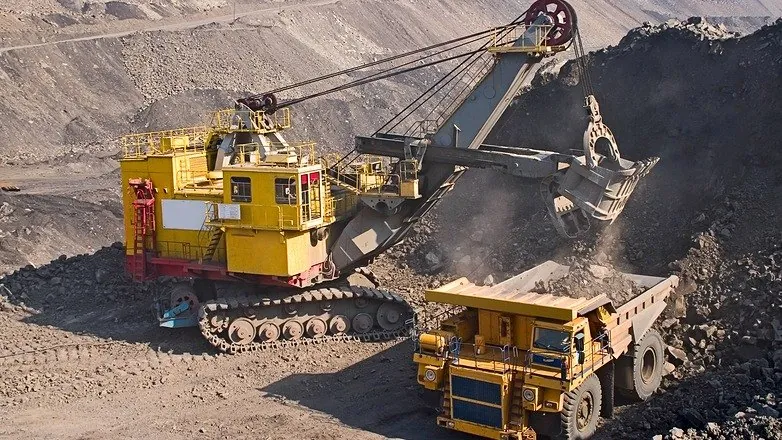
All figures here are illustrative. They are not a market statistic and every owner should replace them with their own quotes. A contractor in Dodoma owns a 20 tonne excavator that was idle for part of the year after a road contract ended. A quarry operator needs it for nine months. The owner offers wet hire (machine, operator and fuel) at an illustrative band of TZS 20 million to 26 million a month for up to 200 hours, and settles at TZS 23 million.
| Monthly line (illustrative) | TZS million | Note |
|---|---|---|
| Hire income, 200 hour cap | 23.0 | Agreed rent before VAT |
| Operator pay and employer contributions | 1.5 | NSSF and WCF at the employer's rates (register IDs F0279 and F0281) |
| Fuel, 3,000 litres at an assumed price | 9.0 | Use the current pump price; this is an assumption |
| Servicing, parts and wear on tracks and bucket | 3.5 | From the owner's own service record |
| Insurance, tracker and site security | 1.1 | Quoted by the insurer and the tracker supplier |
| Mobilisation spread over the term | 0.4 | Low-loader transport out and back |
| Margin before depreciation and finance | 7.5 | 23.0 less 15.5 of running cost |
Over nine hire months the margin is TZS 67.5 million. In the three idle months the owner still pays about TZS 1.1 million a month for insurance and security, which is TZS 3.3 million. The year's margin is TZS 64.2 million before depreciation, finance cost and income tax. Without the hire the same year shows a cost of TZS 13.2 million and no income, which is the case for listing the machine.
Two cost buckets apply, and they stay separate. The first bucket is government and tax at the official rate. Nine months at TZS 23 million is TZS 207 million, above the TZS 200 million VAT threshold (register ID F0242), so the owner registers and charges 18% VAT, TZS 4.14 million a month on top of the rent (F0239). The hirer deducts 10% withholding tax on the rent (F0216), TZS 2.3 million a month, and gives the owner a certificate to credit against income tax; confirm whether the base excludes VAT. Stamp duty on the hire, if treated as a lease, is 1% of the annual reserved rent (F0265), roughly TZS 2.1 million to 2.8 million depending on how the rent is read, paid by the lessee. If the machine lifts, OSHA's inspection fee for a crane in the 10 to 30 tonne class is TZS 150,000 (NEW-04-43).
The second bucket is Zatra's professional fee under the PSFA, agreed in writing before any introduction and paid to Zatra Consultants Limited by its own client, mainly on completion, on the schedule at fees and protection. It is not a government fee, not brokerage and not a charge by the platform, which takes nothing.
What to do now
- Prove the machine's status: purchase or import entry, duty status, any exemption conditions, registration and the bank's written consent if it is charged.
- Check safety paperwork: OSHA examination certificate for any lifting equipment or pressure vessel, service record and operator training file.
- Choose the model: wet hire, dry hire, operating lease or, with advice, finance lease, and keep the contract to machine time, not a job price.
- Set the rate as a band with an hours cap, a minimum term and a deposit, and ask your accountant to model VAT and withholding tax.
- Arrange insurance on the machine and third-party cover, with the hire use and the hirer's site named.
- List on Fursa365 under idle assets with photos taken this month, serial numbers out of frame, and an end date.
- Match and sign the NDNCA once Zatra has verified a qualified request, then let the hirer inspect the machine.
- Sign an advocate-drafted agreement with the terms in the table above, record hours and condition at handover, and stamp it on time.
Key dates
| Item | When |
|---|---|
| OSHA examination of cranes and lifting machines | At least once every 12 months (hoists and lifts every six months) |
| VAT registration | Apply within 30 days of passing the threshold (F0242) |
| VAT return and payment | By the 20th of the following month (F0245) |
| Withholding tax | Deducted by the hirer at each payment; the hirer remits and issues a certificate |
| Stamp duty | On execution of the instrument; late stamping adds a 25% penalty (NEW-02-25) |
| Rent | Monthly in advance, with the deposit held until return |
How Zatra helps
Zatra Consultants Limited screens the owner's right to offer the machine, the documents and the hire model before the listing is shown, and verifies the hirer's identity, mandate and capacity before a match. Under a PSFA it structures the hire or lease, coordinates the inspection, the advocate and the accountant, and records completion. Zatra does not insure, license, value, lend or hold money, and it gives no legal opinion; OSHA, TRA, CRB, TIRA and the Bank of Tanzania decide their own matters, and Zatra does not decide or guarantee any authority's outcome. Clients run their own third-party due diligence.
Two cost buckets apply to every transaction. Government fees and taxes are paid at the official rate to the authority. Zatra's professional fee is separate, agreed under the PSFA and paid to Zatra Consultants Limited. Personal data is handled by Zatra Consultants Limited as the PDPC-registered data controller (see privacy). Introductions of machines, operators and teams are not estate-agency or employment-agency activity (see regulatory boundaries), and verification explains what Zatra checks. When a sale is the better route, NEMBO packages and Kasongo Auction Mart auctions. See business deals, NDNCA explained and, for operators on contract terms, contractor or employee.
Sources and status
Accurate as at 11 Nov 2026. Figures are from the sources below and from the Zatra government fees register, quoted with their register IDs so they can be checked line by line.
- Occupational Health and Safety Act, 2003 (Cap. 297), ss.3, 31, 35, 39. TanzLII, Act of 2003, consolidated text, accessed 11 November 2026. Accessed 11 Nov 2026.
- Occupational Safety and Health Act No. 8 of 2005 (Zanzibar). Zanzibar Government (ikuluzanzibar.go.tz), assented 27 September 2005. Accessed 11 Nov 2026.
- Contractors Registration Act, Cap. 235. TanzLII, Act of 1997, version of 31 July 2002. Accessed 11 Nov 2026.
- Contractors Registration Board: registration of contractors. Contractors Registration Board, official website, accessed 2026. Accessed 11 Nov 2026.
- Value Added Tax Act, Cap. 148, ss.5 and 12(3). TanzLII, Act of 2014, consolidated 2019 text. Accessed 11 Nov 2026.
- TRA: Value Added Tax (VAT) page. Tanzania Revenue Authority, official page, accessed 2026. Accessed 11 Nov 2026.
- Taxes and Duties at a Glance 2025/2026, section 2.0 withholding on rent. Tanzania Revenue Authority, 2025/2026 edition. Accessed 11 Nov 2026.
- Tanzania Corporate: withholding taxes (rent rates). PwC Worldwide Tax Summaries, last reviewed 9 September 2026. Accessed 11 Nov 2026.
- Tanzanian Finance Act, 2026 analysis (lease includes movable property). EY Global Tax Alerts, 17 July 2026. Accessed 11 Nov 2026.
- East African Community Customs Management Act, 2004, revised edition 2019 (ss.117 and 119 headings). Tanzania Revenue Authority copy of the EAC Secretariat revised edition, 30 June 2019. Accessed 11 Nov 2026.
- Amendment to the Mining (Local Content) Regulations 2018 by GN 563 of 2025. Clyde and Co, 18 September 2025 (GN published 12 September 2025). Accessed 11 Nov 2026.
- Tanzania unveils list of 20 mining goods and services for Tanzanian-owned companies. TanzaniaInvest, 6 January 2026. Accessed 11 Nov 2026.
- The Banking and Financial Institutions (Financial Leasing) Regulations, 2022 (GN 575 of 2022). Clyde and Co, 2 December 2022 (GN published 23 September 2022). Accessed 11 Nov 2026.
- Zatra Tanzania Government Fees Register 2026 (IDs cited in this guide). Zatra Consultants Limited, 2026 edition, accessed 11 November 2026. Accessed 11 Nov 2026.
Figures to confirm before you act
- Withholding tax on rent of construction equipment: 10% (register ID F0216); other assets paid to residents: none (F0218); non-residents 15% in the register against 10% in the PwC summary
- VAT standard rate 18% on the Mainland (F0239), 15% in Zanzibar (F0246); registration threshold TZS 200 million (F0242)
- Stamp duty on a lease of movable property: 1% of annual reserved rent (F0265), rate to confirm
- OSHA inspection fees for cranes and pressure vessels (NEW-04-43, NEW-04-42) and the 12-month and six-month examination intervals
- HIV Response Levy on first registration of machinery TZS 250,000 (F0293)
- Whether plant or equipment hire is named in the Mining Commission's reserved list of 20 categories
- Consequence of hiring out plant imported under an exemption (EACCMA ss.117 and 119, operative text to confirm)
General information prepared by the Fursa365 deal desk, Zatra Consultants Limited. It is not legal, tax or investment advice and does not decide or guarantee any authority's outcome. Confirm current rules and fees with the authority named and your own advocate before you act. Mainland Tanzania is described; Zanzibar has separate laws and bodies.
Questions readers ask
Do I pay Fursa365 to list my excavator?
No. Listing and matching are free and the platform takes no money from anyone. If you engage Zatra to structure the hire, that is a professional fee under a PSFA, paid to Zatra Consultants Limited on its schedule. Government taxes and fees are paid separately to the authority at the official rate.
Is hiring out my machine brokerage or a regulated activity?
Fursa365 is not a buy-and-sell marketplace and does not hold money. Hiring out your own machine is your business activity, and the tax and safety rules in this guide apply to it. An owner offering finance leases to many hirers should ask an advocate about the Bank of Tanzania rules first.
Who deducts withholding tax, and can I claim it back?
The hirer deducts 10% of rent on construction equipment at each payment, remits it to TRA and gives you a certificate. You credit it against your income tax for the year. Your accountant confirms the base and whether your machine type falls in the class.
Should the hirer or the owner register with OSHA?
The workplace is registered by its owner or occupier, so the hirer registers its site. Registration carries no fee, but operating without it is an offence. Ask for the certificate, and keep your own OSHA examination certificate for any lifting equipment you supply.
What happens if the hirer damages the machine?
The agreement decides. It should require insurance with the owner as loss payee, a deposit, a joint inspection at return and an indemnity for damage beyond fair wear. Photos and hour readings at handover are your evidence. Disputes and claims go to an advocate and the insurer.
Is a long wet hire the same as a lease?
Not necessarily. A wet hire with an operator is mainly a service. A lease grants the hirer the machine for a term. Stamp duty, VAT description and CRB questions can turn on which it is, so let an advocate label the contract correctly.
Can I hire a machine to a mine in Zanzibar or across the Union?
Treat each side separately. Mainland and Zanzibar have different safety Acts, VAT rates and administrations, and the customs and contractor position for a machine moving across is not confirmed here. Take advocate and accountant advice before moving the machine.

Engineer. Execution of registrations, licences and authority follow-up. Ten years in operations and industrial engineering.